Service delivery
Work orders
Work orders is scoped into the data model, user roles, workflow states, notifications, and dashboard metrics needed for field service management delivery.

Product image
Service delivery
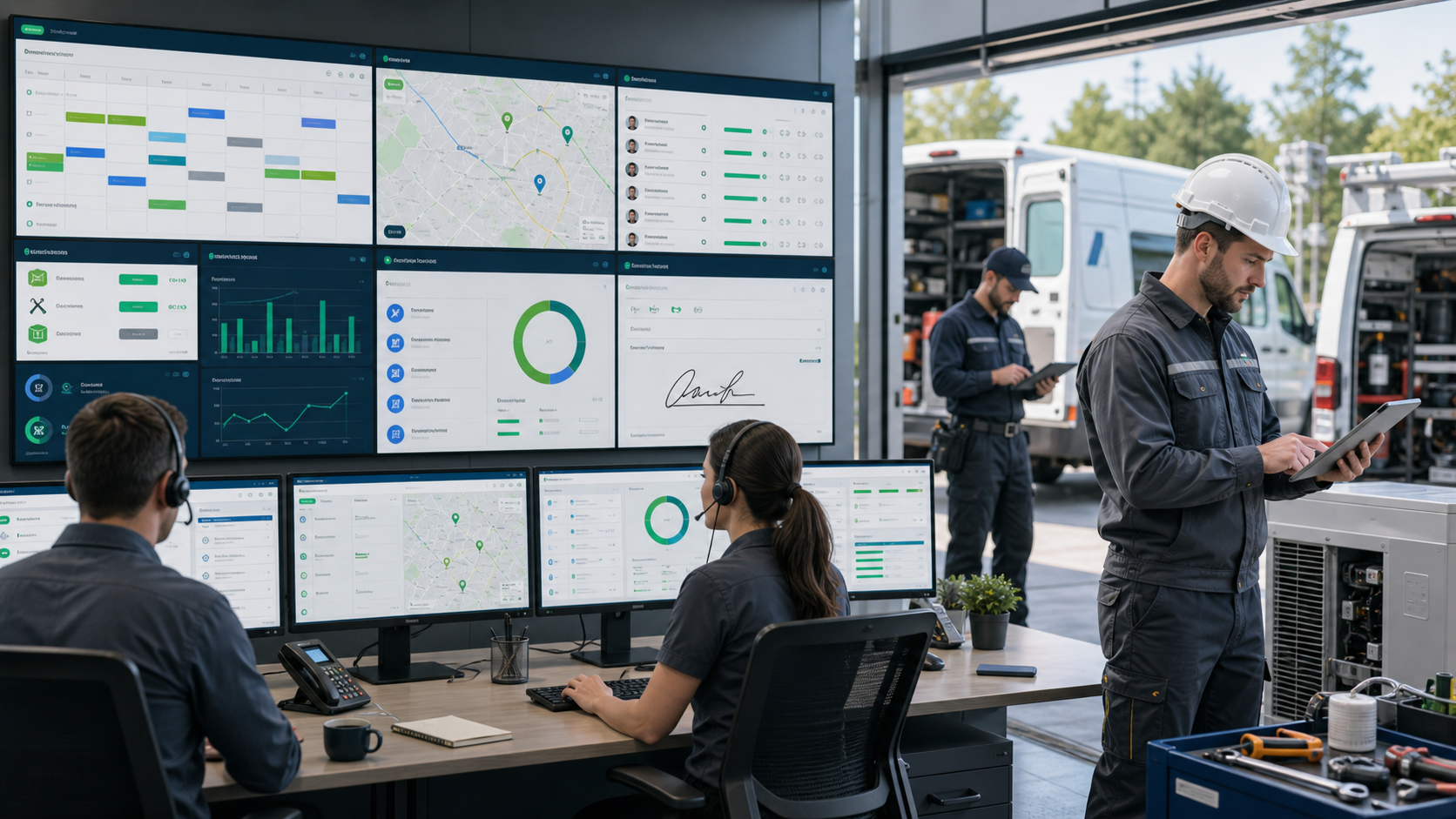
Field service platforms need to coordinate office teams, technicians, customer appointments, mobile job records, asset history, parts availability, invoices, and service-level performance.
Business case
Best for service teams that need to reduce missed appointments, repeat visits, SLA breaches, and manual job paperwork.
Field service research consistently highlights scheduling, dispatch, work order management, mobile apps, asset tracking, parts inventory, reporting, and field-to-office collaboration.
Ideal buyers
Maintenance providers Installation teams Utilities contractors Asset service companiesTypical integrations
Mobile technician apps Parts inventory Customer portals Invoicing and SLA reportingUse this form for a solution demo, implementation estimate, custom workflow, integration, or support discussion.
Solution architecture
LyraSite turns the module list into permissions, forms, dashboards, records, alerts, automations, and reporting views that support daily operations.
Service delivery
Work orders is scoped into the data model, user roles, workflow states, notifications, and dashboard metrics needed for field service management delivery.
Service delivery
Scheduling is scoped into the data model, user roles, workflow states, notifications, and dashboard metrics needed for field service management delivery.
Service delivery
Dispatch is scoped into the data model, user roles, workflow states, notifications, and dashboard metrics needed for field service management delivery.
Service delivery
Technician app is scoped into the data model, user roles, workflow states, notifications, and dashboard metrics needed for field service management delivery.
Service delivery
Parts is scoped into the data model, user roles, workflow states, notifications, and dashboard metrics needed for field service management delivery.
Service delivery
SLA reporting is scoped into the data model, user roles, workflow states, notifications, and dashboard metrics needed for field service management delivery.
Implementation path
Every engagement starts with the operating model and ends with measurable workflows, connected data, and a maintainable delivery path.
Step 1
This phase defines owners, acceptance criteria, data inputs, automation rules, and reporting evidence so the project can move from workshop to production without vague handoff.
Step 2
This phase defines owners, acceptance criteria, data inputs, automation rules, and reporting evidence so the project can move from workshop to production without vague handoff.
Step 3
This phase defines owners, acceptance criteria, data inputs, automation rules, and reporting evidence so the project can move from workshop to production without vague handoff.
Step 4
This phase defines owners, acceptance criteria, data inputs, automation rules, and reporting evidence so the project can move from workshop to production without vague handoff.
Step 5
This phase defines owners, acceptance criteria, data inputs, automation rules, and reporting evidence so the project can move from workshop to production without vague handoff.
FAQ
These answers are written for buyers comparing enterprise software, custom implementation, integrations, automation, and support options.
It includes discovery, data modeling, workflow design, implementation, integration, dashboards, and the core modules: Work orders, Scheduling, Dispatch, Technician app, Parts, SLA reporting.
Yes. Typical integration points include Mobile technician apps, Parts inventory, Customer portals, Invoicing and SLA reporting, with API-first connections where possible and controlled automation where APIs are not available.
It starts with a workflow review, data and integration mapping, priority modules, acceptance criteria, and a clear delivery path before build work begins.
Related products
Short Video Creator
ClipLyra is a short-video creator platform with upload, YouTube and URL ingestion, Deepgram transcription, transcript review, manual short creation, layer media, render queues, plan limits, teams, billing, notifications, and super-admin operations.
View productSocial Post Video Editor
Lyra Video Editor is a multi-track social video studio with templates, image/video/audio layers, captions, stock search, AI image generation, text-to-speech, shapes, masks, animations, GL transitions, comments, workspaces, package limits, and export-ready Remotion rendering.
View product